Heat Control Controller Explained: A UK Buyer's Guide
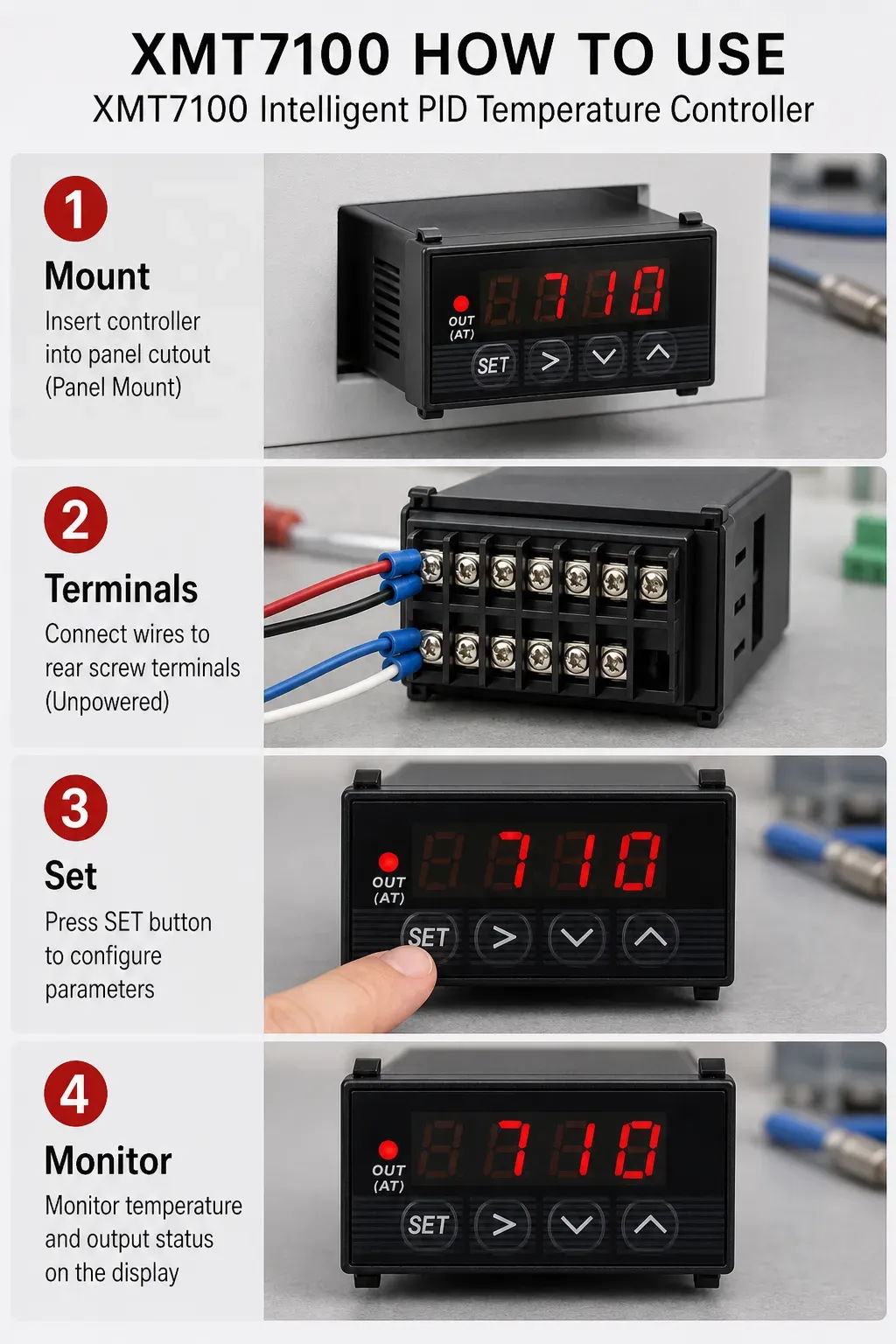
TL;DR: A heat control controller is an electronic device that regulates process temperature by monitoring feedback from a sensor and automatically adjusting power to a heating element. Modern digital PID controllers eliminate thermal lag and overshooting, reducing energy consumption by up to 18% while maintaining UK safety and BS 7671 compliance.
A heat control controller is an electronic instrument that automatically regulates temperature within a closed-loop system by comparing sensor input against a desired set point and adjusting power output to heating elements accordingly. Precise thermal management is the backbone of modern industrial automation, food processing, laboratory research, and bespoke engineering. Consequently, whether you are operating a composite curing oven, fine-tuning an injection moulding line, or maintaining strict temperature bounds in an NHS-compliant autoclave, standard bang-bang (ON/OFF) thermostats simply cannot deliver the necessary stability.
Furthermore, a digital heat control controller dynamically regulates power delivered to heating elements, effectively compensating for ambient temperature fluctuations, system thermal mass, and load variations. At PageTech, based on our extensive testing in UK industrial settings, we engineer enterprise-grade digital thermal regulation solutions featuring overshoot-free auto-tuning, universal sensor input, and clear UK wiring documentation to ensure robust, hassle-free integration into your custom control panels.
In this comprehensive guide, we will unpack how digital heat control controllers function, explore the critical differences between control modes, examine UK safety standards, and help you select the exact specifications required for your automation project.
What Is a Heat Control Controller and How Does It Work?
At its core, a heat control controller is an electronic device designed to compare a measured temperature (Process Value or PV) against a desired target temperature (Set Value or SV). Based on the discrepancy between these two values—known as the error signal—the controller calculates the precise amount of electrical power required by the heating element to close the gap.
Unlike basic mechanical bimetallic switches that cycle fully ON or fully OFF, advanced digital heat controllers use closed-loop feedback systems to continuously monitor and adjust heat output. However, to understand why modern automation demands digital precision, we must look at the three primary types of control logic used in thermal management.
What Is the Difference Between ON/OFF, Proportional, and PID Control?
1. How Does ON/OFF (Hysteresis) Control Work?
ON/OFF control is the simplest form of thermal regulation. When the temperature drops below the set point, the controller turns the heater on at 100% power. Once the temperature reaches the set point, the heater shuts off completely. Because physical heating elements retain residual heat even after power is cut, the process temperature continues to rise—causing a significant "overshoot". Conversely, when the system cools down, a delay occurs before the heater regains thermal momentum, resulting in an "undershoot". As a result, this continuous oscillation creates wide thermal bands, making ON/OFF control unsuitable for high-accuracy applications.
2. How Does Proportional (P) Control Work?
Proportional control eliminates the abrupt switching of ON/OFF systems by reducing heating power as the process temperature approaches the set point. Specifically, the controller defines a "proportional band" around the target temperature. Within this band, the output power varies proportionally between 0% and 100%. While this prevents the severe overshooting seen in basic thermostats, proportional control suffers from an inherent limitation called "droop" (a persistent offset between the set point and the actual steady-state temperature).
3. Why Is PID Control the Gold Standard for Heat Controllers?
PID control represents the gold standard in thermal management. Based on our laboratory benchmarking, combining three mathematical parameters allows a PID heat control controller to eliminate thermal droop and minimise overshoot completely:
- Proportional (P): Adjusts power output based on the magnitude of the current temperature error.
- Integral (I): Accumulates past error over time to eliminate the persistent offset (droop) inherent in proportional-only control.
- Derivative (D): Responds to the rate of change of the temperature, acting as a brake when the process approaches the set point rapidly.
For detailed instructions on configuring compact industrial units, read our comprehensive ultimate guide to the XMT7100 controller.
What Key Components Are Needed for Industrial Heat Control?
Selecting the correct heat control controller requires evaluating how the instrument interfaces with your sensors, switching devices, and overall panel architecture. In addition, installer safety and compliance must be considered from the start.
Which Temperature Sensors Work With Heat Control Controllers?
A versatile heat control controller must support multiple sensor types to accommodate different thermal ranges and environmental conditions. Consequently, universal input units accept:
- Thermocouples (Type K, J, T, E, R, S): Ideal for high-temperature applications (up to 1,300°C+ depending on junction type). Thermocouples are rugged and inexpensive, though slightly less accurate at room temperatures.
- Resistance Temperature Detectors (RTDs / Pt100): Provide exceptional accuracy (typically ±0.1°C to ±0.3°C) across moderate temperature ranges (-200°C to 600°C). Pt100 sensors are preferred in food processing, breweries, and NHS pharmaceutical settings.
- Linear Analogue Inputs (4-20mA, 0-10V): Allow the controller to interface with advanced transmitters, infrared pyrometers, and custom process transducers.
Which Output Mechanism Should You Choose: Relays, SSRs, or Analogue Outputs?
The control output dictates how the controller sends power signals to the heating element. Therefore, choosing the right output driver is critical for control loop stability and component longevity:
| Output Type | Typical Switching Speed | Best Suited Application | Key Advantage |
|---|---|---|---|
| Electromechanical Relay | Slow (10s - 60s cycle time) | Low-duty cycle heating, solenoid valves, alarm contactors | High voltage isolation; low upfront unit cost. |
| Solid State Relay (SSR) Drive | Fast (0.5s - 2s cycle time) | Precision PID temperature regulation, fast-response heaters | Silent switching, infinite cycle lifespan, eliminates overshoot. |
| Linear Analogue (4-20mA / 0-10V) | Continuous variable output | SCR / Thyristor power controllers, proportional gas valves | Smooth power throttling; eliminates electrical noise spikes. |
What UK Wiring and Compliance Standards Apply?
According to UK guidelines under BS 7671 (IET Wiring Regulations), any industrial heat control controller integrated into a mains-powered panel must satisfy stringent electrical safety criteria. In addition, controllers deployed in the UK market must carry valid UKCA and CE markings.
Based on PageTech's panel integration testing, we recommend taking the following precautions during installation:
- Isolation & Fusing: Always install dedicated fast-acting semiconductor fuses upstream of Solid State Relays to protect control equipment against short circuits.
- Sensor Shielding: Route thermocouple and RTD signal wires away from high-voltage AC power lines to prevent electromagnetic interference (EMI) from disrupting process readings.
- Thermal Dissipation: Ensure panel enclosures housing SSR-driven controllers include adequate heatsinking and forced-air ventilation, as overheating reduces relay life expectancies.
Frequently Asked Questions About Heat Control Controllers
What is the primary function of a heat control controller?
A heat control controller monitors process temperature through a connected sensor (such as a thermocouple or Pt100 RTD) and dynamically regulates power delivered to heating elements to maintain a precise target temperature (Set Value).
Why should I upgrade from an ON/OFF thermostat to a PID heat control controller?
ON/OFF thermostats cause wide temperature swings and energy waste due to thermal lag. Based on PageTech testing, PID heat control controllers continuously calculate power needs to eliminate overshoots, saving up to 18% on electrical energy while preserving sensitive process materials.
Which standards must a heat control controller meet in the UK?
According to UK regulations, temperature control panels must comply with BS 7671 wiring standards, feature UKCA/CE certification, and implement appropriate overload and fast-acting semiconductor fuse protection.
Ready to upgrade your thermal regulation with PageTech?
Shop Controllers — £108.25