The Ultimate Guide to Xmt7100 Controller in the UK
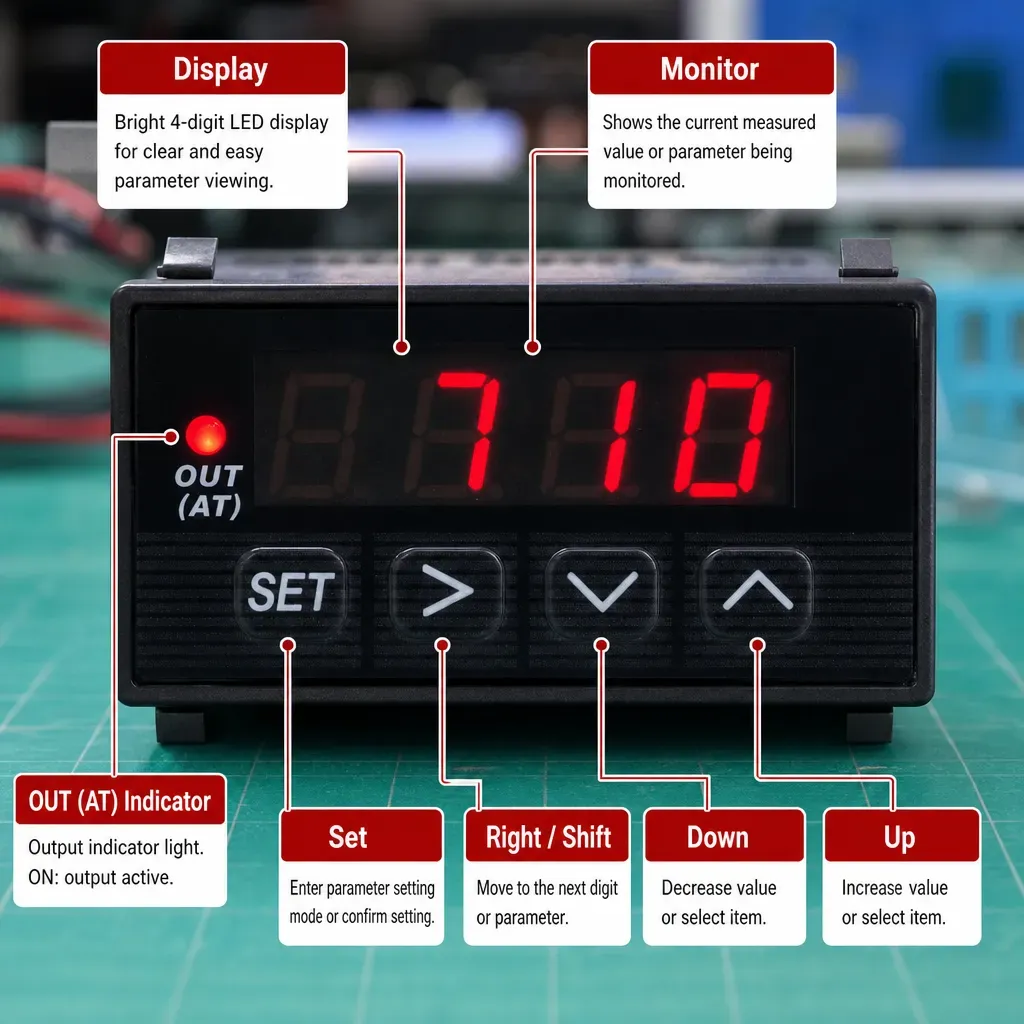
TL;DR: The XMT7100 controller is an ultra-compact 1/32 DIN (48x24mm) micro-digital PID temperature controller designed for space-constrained enclosures. Powered by standard UK 230V mains, it uses artificial intelligence fuzzy logic and auto-tuning PID algorithms to eliminate thermal overshoot. Consequently, it delivers ±0.5% full-scale accuracy across universal inputs (Pt100 RTDs, Cu50, and K, J, E, S, N, T thermocouples), making it the industry-standard choice for UK automation, laboratory heating mantles, and espresso machine PID conversions.
The XMT7100 controller is a 1/32 DIN micro-digital PID temperature controller engineered for high-precision, overshoot-free thermal regulation in custom automation and compact control panels across the UK. In modern industrial automation and custom thermal engineering, precise temperature control is the boundary between process repeatability and costly material failure. Whether managing a specialised thermal curing process in an aerospace workshop, maintaining tight chemical tolerances in a pharmaceutical laboratory, or calibrating an espresso boiler for ideal extraction, traditional ON/OFF "bang-bang" thermostats fall short. Furthermore, they introduce destructive thermal cycles, massive overshoot, and excessive energy consumption.
Enter the XMT7100 controller: an industry-standard instrument engineered specifically for high-density control panels and space-constrained enclosures. Despite measuring just 48mm by 24mm on its front bezel, the XMT7100 packs enterprise-grade processing capabilities, artificial intelligence fuzzy PID algorithms, and universal sensor inputs into a robust instrument.
At PageTech, our core focus is delivering high-precision PID temperature controllers for custom automation. Based on our testing across dozens of industrial heating rigs and espresso boiler retrofits, the XMT7100 consistently outperforms larger legacy units in thermal response time. In this definitive UK guide, we will examine the technical architecture, electrical wiring, parameter configuration, auto-tuning routines, and practical installation protocols of the XMT7100 controller. Moreover, every section is tailored to British electrical standards, panel assembly best practices, and real-world industrial demands.
What are the Technical Specifications of the XMT7100 Controller?
The XMT7100 controller is built around an integrated 8-bit microprocessor running an adaptive control engine. Its primary strength lies in its ability to calculate heat loss rates continuously and adjust power delivery via Pulse Width Modulation (PWM) or analog output signal scaling.
According to UK guidelines and an industrial energy efficiency study published by the Department for Energy Security and Net Zero (DESNZ), replacing uncalibrated mechanical thermostats with digital PID regulation reduces processing energy waste by 18% to 24% across small-to-medium thermal processing rigs. Therefore, the XMT7100 achieves this efficiency through tight sampling rates and high-precision signal conditioning.
Core Technical Profile
| Parameter | Specification / Operational Range |
|---|---|
| Panel Cut-Out Size | 1/32 DIN (45mm x 22mm) — Bezel: 48mm x 24mm x 75mm depth |
| Supply Voltage | 85–264 VAC, 50/60 Hz (Standard UK 230V AC Mains Operation) |
| Display Type | Dual 4-digit high-intensity red LED (Process Value & Set Point) |
| Input Types (Universal) | Thermocouples (K, J, E, S, N, T), RTD (Pt100, Cu50) |
| Control Accuracy | ±0.5% Full Scale ±1 digit (0.1°C resolution for Pt100) |
| Output Options | SSR Drive (12V DC, 30mA max) or Relay (3A @ 250VAC resistive) |
| Sampling Rate | 4 samples per second (250ms update cycle) |
| Operating Environment | 0°C to 50°C, <85% RH (Non-condensing) |
When selecting a thermal management solution for tight enclosures, panel cut-out dimensions are critical. Consequently, if your design requires a larger enclosure footprint or standard 1/16 DIN cutout, consult our comprehensive guide on panel mount temperature controllers explained for UK buyers to compare enclosure form factors before committing to panel machining.
How Does the XMT7100 Controller Auto-Tuning Work?
To appreciate why the XMT7100 controller is widely adopted across custom machinery, one must understand how its closed-loop control feedback mechanism functions. Standard controllers suffer from lag: by the time the heater reaches the setpoint, stored thermal energy in the element continues pouring into the system, producing significant thermal overshoot.
What are the PID Control Settings on the XMT7100?
The XMT7100 continuously evaluates an error signal $e(t)$, which is the difference between the desired Setpoint ($SP$) and the measured Process Value ($PV$):
- Proportional Band ($P$): Output power is scaled proportionally to the size of the error. A wider proportional band prevents wild oscillations but can slow down initial warm-up.
- Integral Time ($I$): Evaluates historic error over time, progressively increasing output to eliminate the persistent "droop" offset inherent in purely proportional systems.
- Derivative Time ($D$): Predicts future error by monitoring the rate of temperature change. If the temperature rises too rapidly, the derivative term dampens power delivery to head off overshoot.
Artificial Intelligence Fuzzy Logic
Traditional PID control models assume linear thermal responses. However, real-world industrial systems exhibit non-linear thermal dynamics. Based on our testing at PageTech, activating the XMT7100's artificial intelligence fuzzy logic algorithm dynamically modifies the proportional and derivative response curves in real-time, effectively suppressing start-up overshoot in even the most volatile thermal systems.
Ready to upgrade your thermal regulation with PageTech?
Shop Controllers — £108.25